
 Ryain
Ryain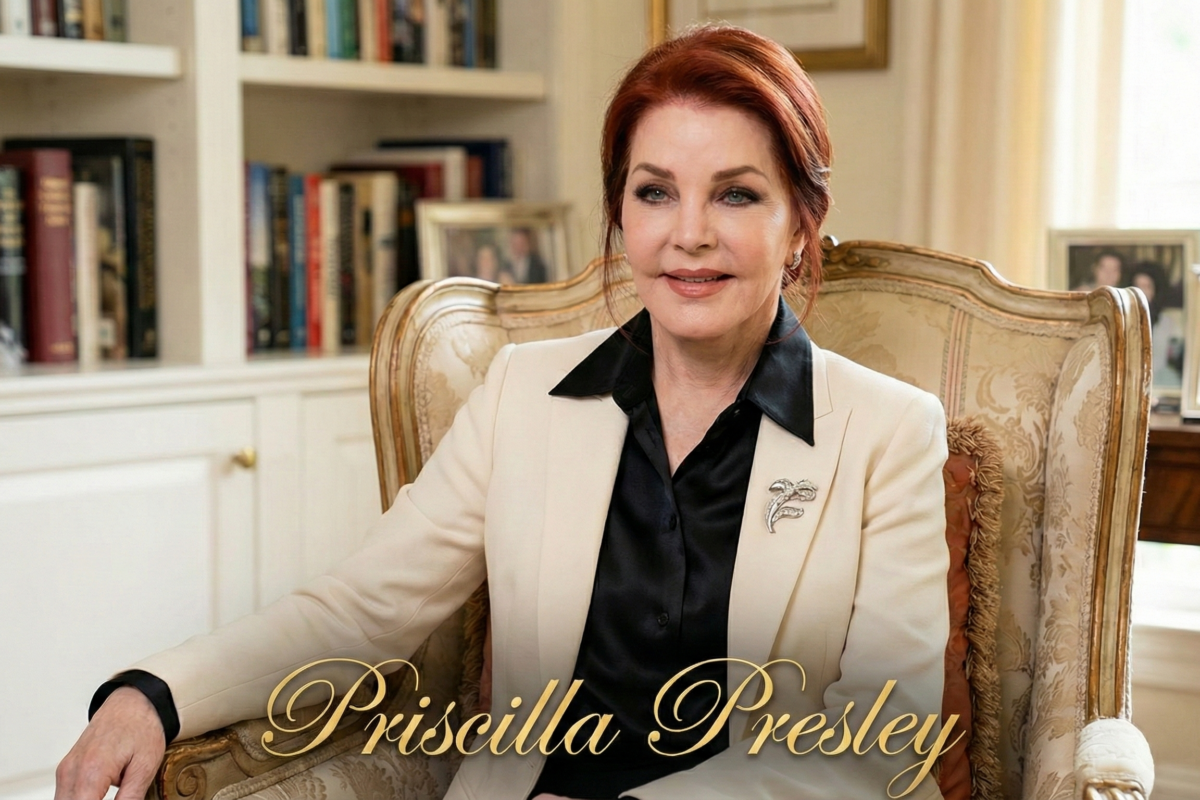
Priscilla Presley, born on May 24, 1945, is widely known as an American actress, businesswoman, and cultural figure whose life has long been intertwined with the legacy of Elvis Presley. While much public attention has focused on her role as Elvis’s former wife, Priscilla has also carved out her own identity through resilience, entrepreneurship, and a lasting presence in the entertainment world.
Born as Priscilla Ann Wagner in Brooklyn, New York, her early life was shaped by constant movement due to her stepfather’s military career. After her parents’ divorce, Priscilla moved with her mother and stepfather to various military bases, including time spent in Texas. This upbringing instilled discipline and adaptability at a young age, traits that would later help her navigate life under intense public scrutiny.
Priscilla’s life changed dramatically in 1959 when she met Elvis Presley while he was stationed in Germany with the U.S. Army. At just 14 years old, she was introduced to a world far removed from her quiet military upbringing. Their relationship developed during her teenage years and continued long-distance after Elvis returned to the United States, eventually leading her to move to Memphis, Tennessee, where she lived under the supervision of Elvis’s family while completing her education.
The couple married on May 1, 1967, in a private ceremony in Las Vegas, marking Priscilla’s official entry into the global spotlight. The following year, she became a mother with the birth of Lisa Marie Presley on February 1, 1968. While their marriage placed her at the center of pop culture, it also came with personal challenges, as Elvis’s demanding career and lifestyle took a toll on their relationship.
After their divorce in 1973, Priscilla and Elvis maintained a respectful and supportive bond until his death in 1977. In the years that followed, Priscilla emerged as a strong and capable figure in her own right, taking on the responsibility of preserving and managing Elvis’s legacy. One of her most significant achievements was transforming Graceland into a public museum, ensuring it became one of the most visited private homes in the United States.
Beyond her work with Elvis’s estate, Priscilla built a career as an actress and businesswoman, appearing in television series and films while establishing herself as a savvy manager and public figure. Today, she is recognized not only as a key guardian of Elvis Presley’s cultural impact but also as a woman who successfully transitioned from a life defined by fame into one shaped by independence and lasting influence.